
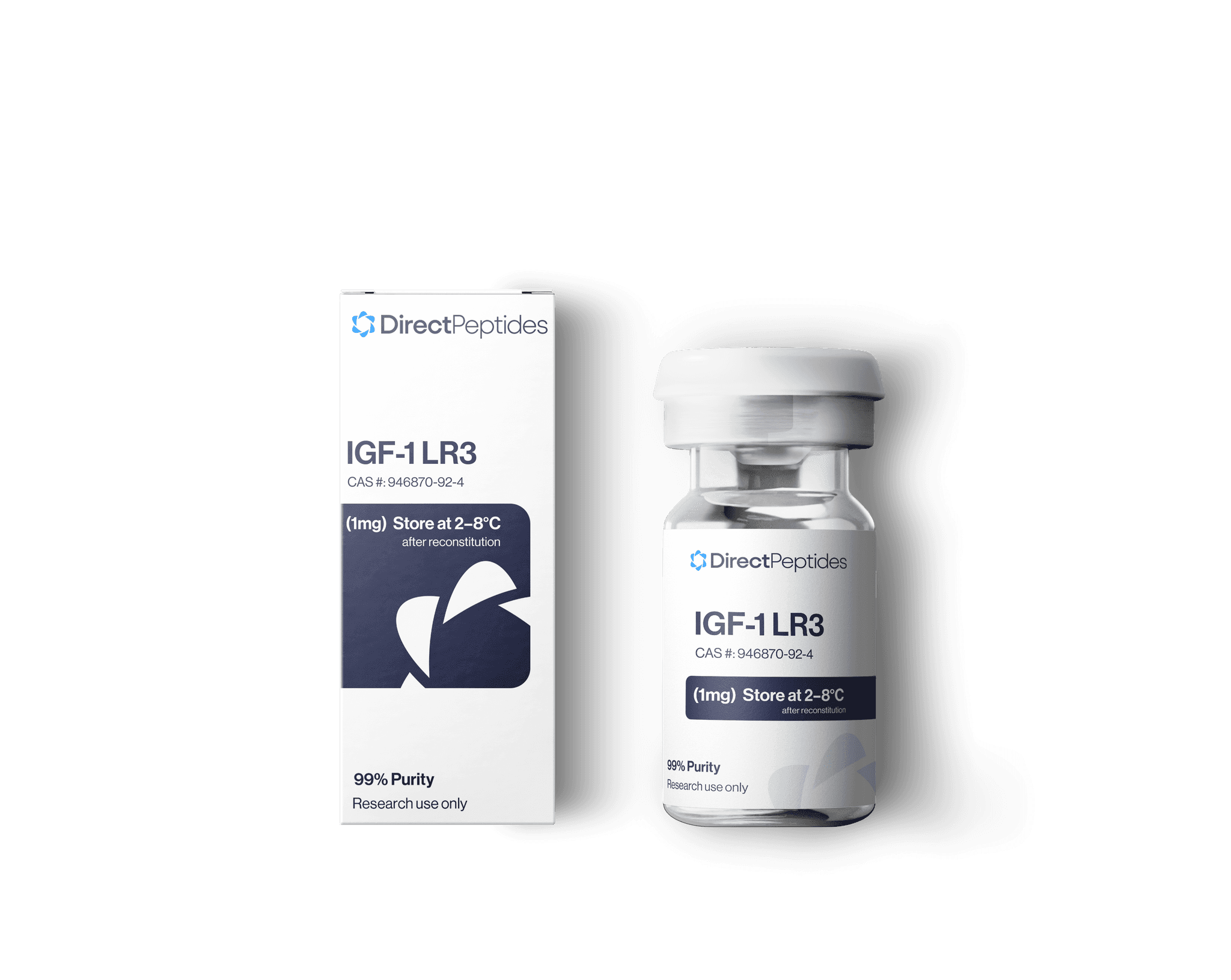


IGF-1 LR3 Overview
IGF-1 LR3 is an 83-amino acid synthetic polypeptide engineered to overcome limitations of native IGF-1 through two strategic modifications: glutamic acid-to-arginine substitution at position 3 and addition of a 13-residue N-terminal extension (MFPAMPLSSLFVN). These alterations reduce binding affinity for IGFBPs by approximately 100-fold while maintaining full target receptor activation capacity, resulting in increased bioavailability and extended half-life compared to native IGF-1. Research models examine its activation of tyrosine kinase signaling, downstream PI3K-Akt and Ras-MAPK pathways, effects on substrate uptake in experimental models, protein synthesis stimulation, and molecular proliferation in laboratory settings.
Francis et al. (1992). Castellino et al. (1992).
Research Findings
IGF-1 LR3 has been extensively studied in molecular signaling and pathway research, with investigations focusing on receptor-mediated signaling cascades, anabolic dynamics, substrate utilization, and molecular remodeling in various experimental models. Studies examine both its enhanced pharmacokinetic properties and downstream molecular responses.
Key Areas of Research:
-
Signaling: PI3K-Akt, MAPK-ERK, tyrosine kinase
-
Substrate: Uptake dynamics, lipid pathways, amino acid
-
Anabolic: Protein synthesis, proliferation, nitrogen
-
Molecular: Differentiation, survival signaling, viability
Together, these investigations demonstrate IGF-1 LR3’s potent activation of signaling pathways. As a modified IGF-1 analog with reduced IGFBP binding, LR3 provides a research framework for examining target receptor biology, anabolic signaling mechanisms, and downstream pathway characterization in diverse experimental systems.
Francis et al., Journal of Molecular Endocrinology, 1992
Castellino et al., Biochemical and Biophysical Research Communications, 1992
Reviews
There are no reviews yet.